What 14 Industry Studies Say About Consumer Trust in AI Voices
We compiled data from IAB, Pew Research, Edelman, and 11 other published studies to track how consumers feel about AI-generated voices in advertising. Here's what the numbers show.

If you work in advertising, media, or voiceover, you've probably heard strong opinions about AI-generated voices. Some say they're the future. Others say audiences don't want them. We wanted to see what the data actually says.
We went through 14 published studies from organizations like the IAB, Pew Research Center, Edelman, CivicScience, Jacobs Media, Kantar, and others. We pulled out the key findings, verified each stat against its original source, and put it all in one place.
The result is our AI Voice Sentiment Index, an interactive dashboard where you can explore the data yourself.
The short version
Consumers are skeptical of AI voices in advertising, and that skepticism is growing.
- 75% of radio listeners oppose AI cloned voices replacing human talent (Jacobs Media, 29,000+ respondents)
- Only 13% of consumers trust ads created entirely by AI (Smartly.io)
- 41% of consumers say AI-generated ads bother them (Kantar)
- 81% of Americans are concerned about the implications of AI voice technology (Podcastle/Async, 1,000 respondents)
The perception gap
One of the most striking findings comes from the IAB. In their 2026 study, 82% of ad executives believed Gen Z and Millennial consumers feel positively about AI-generated ads. The actual number? 45%. That's a 37-point gap, and it widened from 32 points just a year earlier.
Consumers are also more likely than ad executives to describe brands using AI as "manipulative" (20% vs 10%) or "unethical" (16% vs 7%).
Need a commercial voice for your next project?
RealVOTalent is a marketplace of verified human voice actors. Play demos, compare rates, and hire in minutes.
Featured Commercial Talent
View all →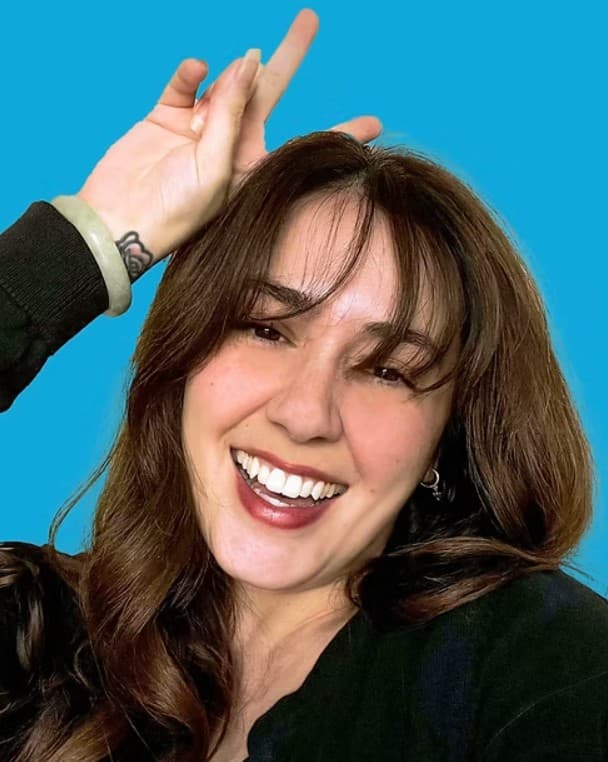
With experience in commercial, and character work, Hannah is easy to direct, quick to adjust, and eager to bring strong performance and intention to every script. Hannah comes from an on-camera background, is comfortable working in live-directed sessions and available via Source-Connect.

Aaron is a versatile voice actor working out of Central Florida. He works across commercial, video game, audiobook, and audio drama genres. His voice is known for its clarity, emotional precision, and a naturally heroic edge, making him well suited for both grounded storytelling and dynamic character work. He approaches each project with focus and intention, bringing thoughtful interpretation and strong connection to the material. Whether delivering high energy commercial copy, nuanced long form narration, or layered character performances, Aaron prioritizes authenticity, consistency, and emotional truth in every read. Clients and collaborators value his professionalism, adaptability, and collaborative approach in session. He takes direction well, communicates clearly, and works efficiently to support the creative vision and deliver reliable results. At the core of his work is a respect for the story and the audience. Aaron’s goal is always the same: to serve the script, honor the tone, and create performances that feel natural, compelling, and believable.
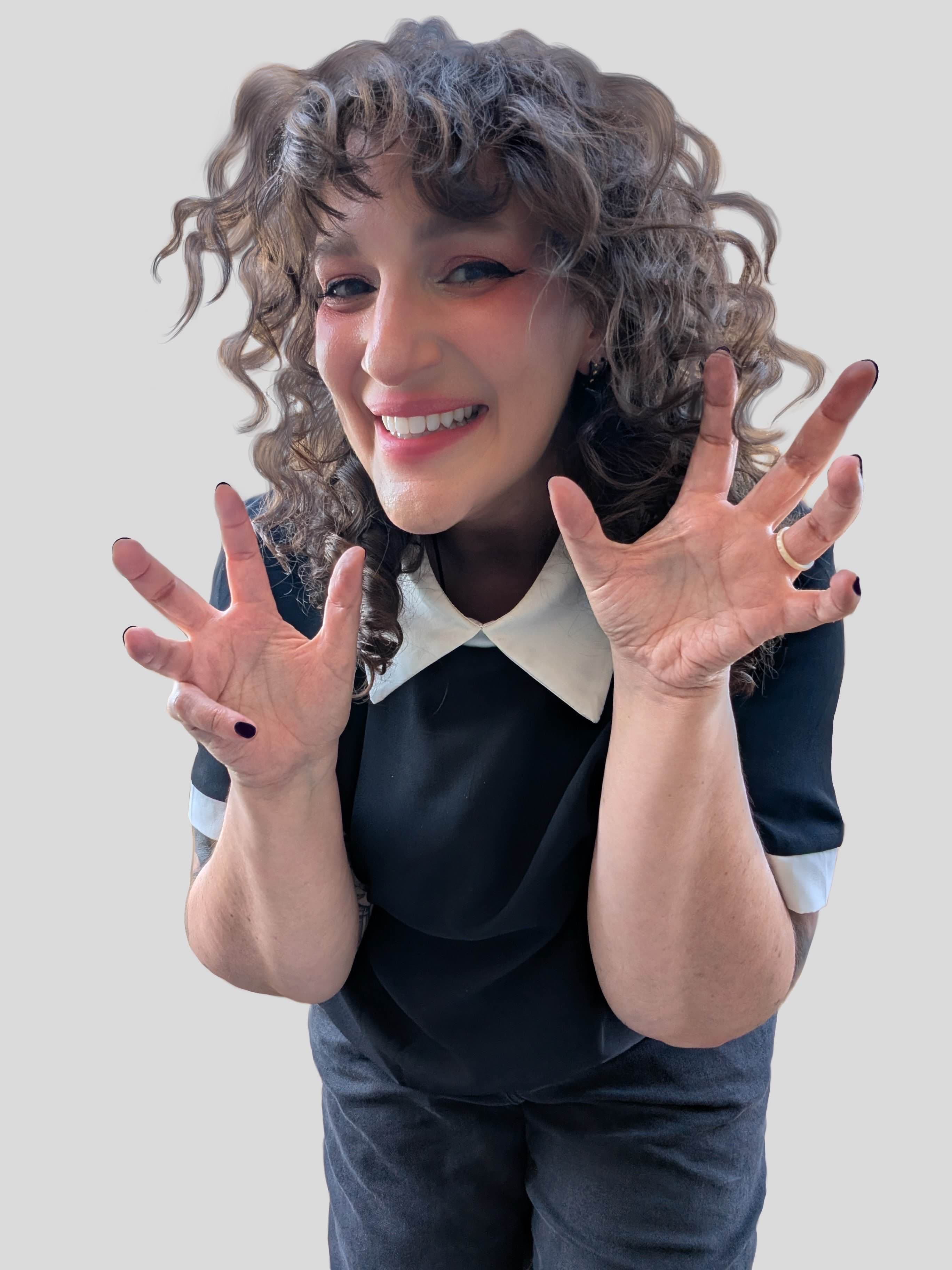
Sara is a full time American voice actor who brings energy, charisma, and playfulness to each performance. With a strong foundation in creative storytelling and clear communication, she shines in character-driven work, where she can explore bold choices, distinct personalities, and expressive range. That same sense of play also informs her commercial and narration reads, giving them a fresh, authentic feel. Her voice carries a cool, charismatic blend of Cameron Diaz and Drew Barrymore, with hints of Miley Cyrus edge and Aubrey Plaza charm. Naturally playful and emotionally agile, Sara’s sound is engaging and adaptable. Known for her collaborative, low-stress sessions and taking direction like a beast, she makes the process smooth, fun, and creatively rewarding. Performing in a custom-built, professionally sound-treated studio, Sara delivers broadcast-quality audio with quick delivery. Accent work includes general American, American (south), British RP, French, Italian, and German. Based in Central Florida with her partner and dog, Sara spends her free time playing and streaming video games, painting, and spending as much time in a hammock as possible.
Gen Z is the most skeptical generation
This surprised us. You might expect the most digitally native generation to be the most comfortable with AI. But according to the IAB data, 39% of Gen Z report negative feelings toward AI ads, compared to 20% of Millennials.
Pew Research found a similar pattern: 61% of adults under 30 say AI will make people worse at thinking creatively.
The counter-evidence
We included data that complicates the narrative because we think it matters. Not everything points negative.
Smartly.io found that 48% of consumers trust ads co-created by a person with AI support, compared to just 13% for fully AI-created ads. Human involvement is the differentiator.
Attest found that objection to AI-generated models in advertising fell from 49% to 46% year over year. A small decline, but directionally different from the other trends.
Our disclosure
RealVOTalent is a human voice talent marketplace. We have a business interest in this topic. That's why we included counter-evidence, flagged conflicts of interest in our sources (Podcastle is an AI company, the Veritonic study was funded by an AI ad platform), and disclosed our own position.
The data should stand on its own. If it doesn't support our case, we'd rather know that than pretend otherwise.
Explore the full dataset
The AI Voice Sentiment Index includes all 14 sources with direct links, sample sizes, methodology notes, and interactive charts. It's free to use and cite under CC BY 4.0.
If you're making decisions about whether to use AI or human voices in your next campaign, the data is there. Take a look.

Written by
Trevor O'Hare
Founder, RealVOTalent
Trevor is a professional voice actor who has worked in audio for over two decades and been in the voiceover industry since 2019, completing thousands of projects for Fortune 500 companies and small businesses alike. He also coaches voice talent at VOTrainer.com.
Get voiceover industry tips & insights
Join our newsletter. No spam, unsubscribe anytime.


